InBody Scans
Why Have an InBody Scan?
Your weight only tells you one small part of the story.
An InBody Scan provides a detailed look at your body composition, helping you understand how your weight is distributed between muscle, body fat and body water.
It gives you a useful starting point and, even more importantly, allows you to track meaningful changes over time — whether you're working towards strength, health, rehabilitation, performance or body composition goals.
What Does an InBody Scan Measure?
Your InBody results provide information including:
- Skeletal muscle mass
- Body fat mass and body fat percentage
- Body water
- Visceral fat
- Muscle distribution throughout different areas of the body
- Differences between the left and right sides
- Overall body composition and changes over time
Rather than focusing on one number, we can use your results to build a more complete picture of your body composition.
What to Expect
An InBody Scan is quick, simple and non-invasive.
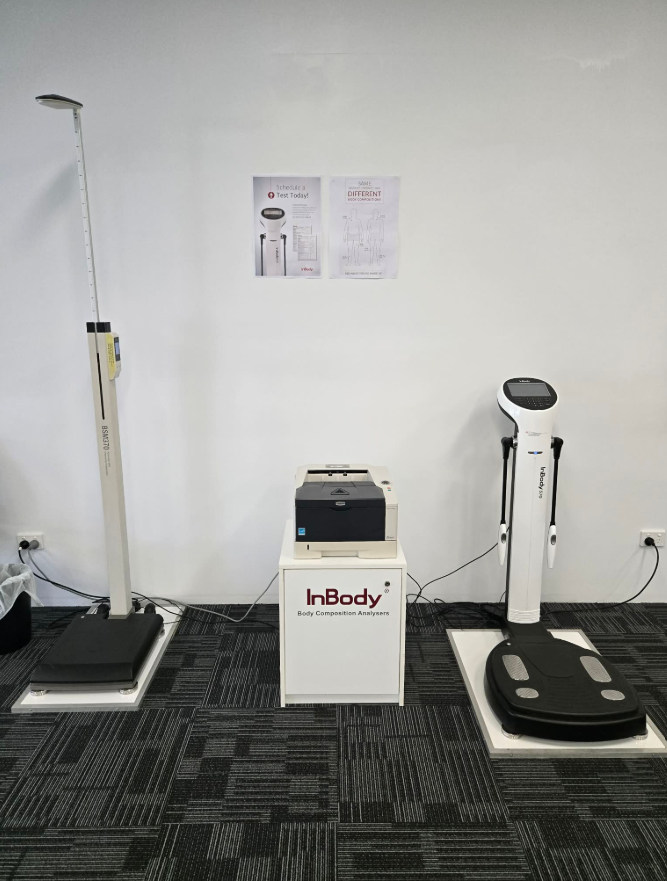
You'll stand barefoot on the InBody device and hold the hand electrodes while the scan takes its measurements.
Following your scan, you'll receive your results to help you understand your current body composition and provide a baseline for future scans.
For the most useful comparison over time, we recommend completing repeat scans under similar conditions where possible.
Who Can Have an InBody Scan?
InBody Scans can be useful for:
- People working towards strength or muscle-building goals
- People wanting to track changes in body composition
- Athletes monitoring their training and performance
- Gym members wanting more information than body weight alone
- Physio clients rebuilding strength following injury
- Anyone interested in better understanding their body composition
You don't need to be an athlete or have a specific weight goal. An InBody Scan can simply provide useful information about where you're starting from and how your body changes over time.
Frequently Asked Questions
1. How is an InBody Scan different from weighing myself?
A set of scales tells you your total body weight. An InBody Scan provides more detail about what contributes to that weight, including muscle, body fat and body water.
2. How long does an InBody Scan take?
The actual scan only takes a couple of minutes.
3. How should I prepare for my InBody Scan?
For consistent results, it's best to complete repeat scans under similar conditions at a similar time of day.
4. How often should I have an InBody Scan?
That depends on what you're tracking. If you're working towards a particular strength, training or body composition goal, repeating your scan every 8 - 12 weeks can help identify changes that may not be obvious from body weight alone.
5. Will someone explain my results to me?
Yes. We don't want to simply hand you a page full of numbers. We'll help you understand the key parts of your scan, what they mean and which measurements may be most useful for you to track over time.
Frequently Asked Questions
A set of scales tells you your total body weight. An InBody Scan provides more detail about what contributes to that weight, including muscle, body fat and body water.
The actual scan only takes a couple of minutes.
For consistent results, it's best to complete repeat scans under similar conditions at a similar time of day.
That depends on what you're tracking. If you're working towards a particular strength, training or body composition goal, repeating your scan every 8 - 12 weeks can help identify changes that may not be obvious from body weight alone.
Yes. We don't want to simply hand you a page full of numbers. We'll help you understand the key parts of your scan, what they mean and which measurements may be most useful for you to track over time.